|
-
10th August 09, 07:32 AM
#1
The Saffron is always a good choice for an Irishman, plastic or otherwise.
-
-
10th August 09, 02:27 PM
#2
Some new points here, and some not so new.
Whilst it is true that 'Good King James'* coined both of the terms 'Great Britain' and the 'United Kingdom', they didn't come into serious use until much later, and not even with the union of parliaments, but only when most of the British Empire was gone, so that it became necessary to have terms to cover British possessions near at hand, other than simply as part of the Empire.
Not only that, but the modern usage is different from that which Good King James intended. He meant the same thing by both Great Britain and the United Kingdom, simply all the areas of which he was king. However, in Modern usage, and officially, Great Britain, aka Britain, means England, Wales and Scotland, i.e. the contiguous British mainland, whereas the United Kingdom or UK is all the above plus Northern Ireland, the Isle of Man and the Channel Islands, i.e. including all the bits directly offshore that are under British rule.
Sadly, even many British people get this terminology mixed up, so it's no great wonder that Americans invariably get it wrong. I used the term 'contiguous' intentionally, as it may particularly help Americans to think of Britain as analogous to the 'lower 48', whereas the whole country is the UK. Unfortunately, even if you get it right, you may come across some drunk in a pub who still tells you that you are wrong, LOL!
As for the kilt not being Irish national dress, it is true on the one hand that it has never been recognised by the Irish government. On the other hand, the main thrust for it's adoption as such was by the Gaelic League during it's early years, and that organisation was founded in 1893, some 19 years before there was any Irish government that could have considered the matter and rendered a decision one way or the other.
Prominent early wearers of the Irish solid green or solid saffron kilt in the late 1800s and early 1900s were invariably Irish nationalists, which to many would be reason enough to wear a kilt as a symbol or Ireland. The concept is hardly new (unless to you anything a mere century old is brand new) and not likely to go away no matter how much some would like to wish it away.
As to whether the English are celts, the oldest known inhabitants of England were the Britons, who of course were Brythonic Celts by definition. To what extent the Angles and Saxons actually displaced them is not really a settled question. It was once thought that they were all driven into Wales or killed, but opinion seems to be softening on that, so the English may be some mixture of Celtic and Germanic (Angle in the North and Saxon in the South), and perhaps Norman, although it has long been thought that the Normans only married into the aristocracy and did not mix with the common people.
Of course, even if the English may have some Brythonic celtic blood, what the English are certainly not is Goidelic celts, unlike the Irish and the Scots. Unless of course, like me, you have both English and Irish blood, for example.
*I prefer to call him that, because in full he was King James II of England and King James VI of Scotland.
-
-
10th August 09, 08:35 PM
#3
I have been reading this post and cannot help but wonder how many people left Ireland or Scotland and never wanted to be reminded of their homeland again. I know in my Wife's Grandfathers case, he just barely made it out of Ireland alive and had no interest in ever being reminded of the "Old Country".
By Choice, not by Birth
-
-
10th August 09, 11:30 PM
#4
 Originally Posted by O'Callaghan

Some new points here, and some not so new.
Whilst it is true that 'Good King James'* coined both of the terms 'Great Britain' and the 'United Kingdom', they didn't come into serious use until much later, and not even with the union of parliaments, but only when most of the British Empire was gone, so that it became necessary to have terms to cover British possessions near at hand, other than simply as part of the Empire.
Not only that, but the modern usage is different from that which Good King James intended. He meant the same thing by both Great Britain and the United Kingdom, simply all the areas of which he was king. However, in Modern usage, and officially, Great Britain, aka Britain, means England, Wales and Scotland, i.e. the contiguous British mainland, whereas the United Kingdom or UK is all the above plus Northern Ireland, the Isle of Man and the Channel Islands, i.e. including all the bits directly offshore that are under British rule.
Sadly, even many British people get this terminology mixed up, so it's no great wonder that Americans invariably get it wrong. I used the term 'contiguous' intentionally, as it may particularly help Americans to think of Britain as analogous to the 'lower 48', whereas the whole country is the UK. Unfortunately, even if you get it right, you may come across some drunk in a pub who still tells you that you are wrong, LOL!
As for the kilt not being Irish national dress, it is true on the one hand that it has never been recognised by the Irish government. On the other hand, the main thrust for it's adoption as such was by the Gaelic League during it's early years, and that organisation was founded in 1893, some 19 years before there was any Irish government that could have considered the matter and rendered a decision one way or the other.
Prominent early wearers of the Irish solid green or solid saffron kilt in the late 1800s and early 1900s were invariably Irish nationalists, which to many would be reason enough to wear a kilt as a symbol or Ireland. The concept is hardly new (unless to you anything a mere century old is brand new) and not likely to go away no matter how much some would like to wish it away.
As to whether the English are celts, the oldest known inhabitants of England were the Britons, who of course were Brythonic Celts by definition. To what extent the Angles and Saxons actually displaced them is not really a settled question. It was once thought that they were all driven into Wales or killed, but opinion seems to be softening on that, so the English may be some mixture of Celtic and Germanic (Angle in the North and Saxon in the South), and perhaps Norman, although it has long been thought that the Normans only married into the aristocracy and did not mix with the common people.
Of course, even if the English may have some Brythonic celtic blood, what the English are certainly not is Goidelic celts, unlike the Irish and the Scots. Unless of course, like me, you have both English and Irish blood, for example.
*I prefer to call him that, because in full he was King James II of England and King James VI of Scotland.
Actually, the Isle of Man and the Channel Islands are crown dependencies deemed to be outside the UK.
[B][COLOR="DarkGreen"]John Hart[/COLOR]
Owner/Kiltmaker - Keltoi
-
-
11th August 09, 10:43 AM
#5
Originally Posted by slohairt
Actually, the Isle of Man and the Channel Islands are crown dependencies deemed to be outside the UK.
Then why does my passport say the United Kingdom of Great Britain, Northern Ireland, the Isle of Man and the Channel Islands?
-
-
11th August 09, 10:57 AM
#6
Originally Posted by O'Callaghan
Then why does my passport say the United Kingdom of Great Britain, Northern Ireland, the Isle of Man and the Channel Islands?
I thought that Great Britain was the big island (you know: England, Scotland & Wales) and the United Kingdom was included North Ireland and so on. But of course I may be getting most of this from the movie King Ralph.
-
-
11th August 09, 11:27 AM
#7
Originally Posted by The Guy in the Kilt at UC
I thought that Great Britain was the big island (you know: England, Scotland & Wales) and the United Kingdom was included North Ireland and so on. But of course I may be getting most of this from the movie King Ralph.
For nationality purposes the Channel Islands and Isle of man (Crown dependencies - possessions of the Crown) are deemed to be of British nationality. The United Kingdom itself comprises only England, Scotland and Wales (Great Britain) and Northern Ireland. Britain came about after the Union of The Crowns between Scotland and England in 1603 when James VI of Scotland assumed the crown of both kingdoms. At the time Wales was considered an integral part of England as a principality as was Ireland being part of the English crown following its conquest in Tudor times, Henry VIII being declared king of Ireland. Hence Great Britain was essentially Scotland together with England (incorporating Wales and Ireland). Simple isn't it?
-
-
12th August 09, 03:42 AM
#8
Originally Posted by Phil
For nationality purposes the Channel Islands and Isle of man (Crown dependencies - possessions of the Crown) are deemed to be of British nationality. The United Kingdom itself comprises only England, Scotland and Wales (Great Britain) and Northern Ireland. Britain came about after the Union of The Crowns between Scotland and England in 1603 when James VI of Scotland assumed the crown of both kingdoms. At the time Wales was considered an integral part of England as a principality as was Ireland being part of the English crown following its conquest in Tudor times, Henry VIII being declared king of Ireland. Hence Great Britain was essentially Scotland together with England (incorporating Wales and Ireland). Simple isn't it?
Close, but no cigar  . The Kingdom of Ireland was a seperate kingdom from 1542 until the act of Union in 1801. So England did incorporate Wales as a principality but not Ireland, which remained a seperate kingdom until 200 years after Scotland was subsumed. Simples. You want meerkats, comparethemeerkat.com. . The Kingdom of Ireland was a seperate kingdom from 1542 until the act of Union in 1801. So England did incorporate Wales as a principality but not Ireland, which remained a seperate kingdom until 200 years after Scotland was subsumed. Simples. You want meerkats, comparethemeerkat.com.
-
-
11th August 09, 11:59 AM
#9
Originally Posted by O'Callaghan
Then why does my passport say the United Kingdom of Great Britain, Northern Ireland, the Isle of Man and the Channel Islands?
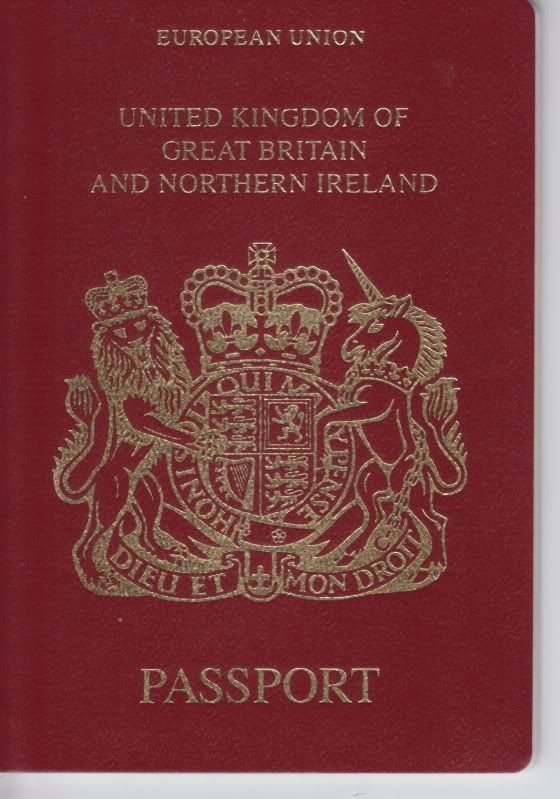
Mine doesn't.
The Cover:
Pages 1 and 2
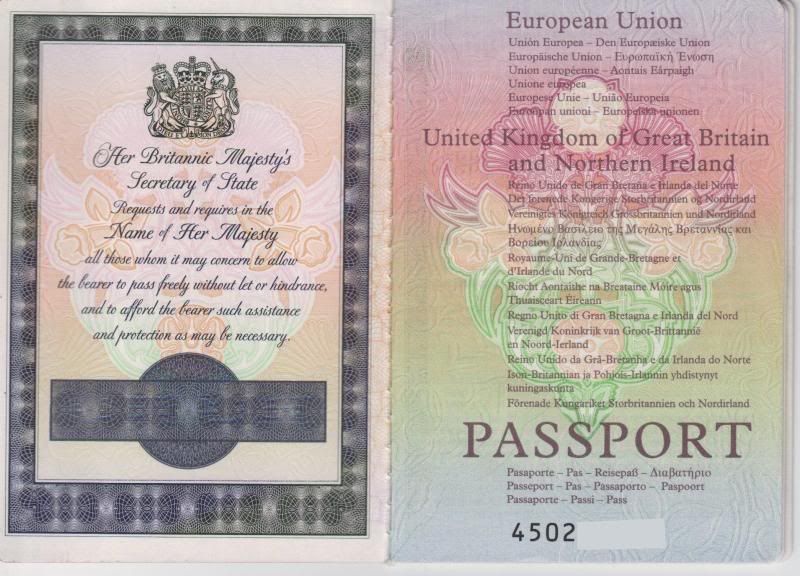
No mention of the Isle of Man and the Channel Islands.
Is your passport current?
Regards
Chas
-
-
14th August 09, 06:53 PM
#10
Originally Posted by Chas
Mine doesn't.
The Cover:
Pages 1 and 2
No mention of the Isle of Man and the Channel Islands.
Is your passport current?
Regards
Chas
It seems you are right about the current one, but I also have an older cancelled one (with a blue cover) that does list the Isle of Man and the Channel Islands as part of the UK. I wonder if this has something to do with the EU? The red passport is the unified EU version, and the Isle of Man and the Channel Islands are not considered to be part of the EU. IOW, it seems that when we got EU passports they took them off the list because they are not in the European Union? Does that mean they used to be in the UK and no longer are? Perhaps since we joined the EU? I assume the people who live in the those places still have blue passports?
-
Similar Threads
-
By Mr. MacDougall in forum General Kilt Talk
Replies: 19
Last Post: 18th May 07, 05:37 AM
-
By billmcc in forum General Kilt Talk
Replies: 38
Last Post: 8th March 06, 04:26 PM
-
By Toddish McWong in forum Show us your pics
Replies: 7
Last Post: 8th January 05, 06:28 PM
-
By bear in forum Contemporary Kilt Wear
Replies: 7
Last Post: 11th July 04, 09:38 PM
Tags for this Thread
 Posting Permissions
- You may not post new threads
- You may not post replies
- You may not post attachments
- You may not edit your posts
-
Forum Rules
|
|









Bookmarks